
Quiet...
On Restoring the Interior Garden

Have you been tending everyone else’s garden while letting your own get out of control?
I’m talking metaphorically, of course.
I heard a version of this question as I listened to a fictional story on my walk this morning. It was about a woman whose engagement was called off by her fiancé because she started to present as someone other than who he thought he knew. She had learned to negate her own needs so well that she could no longer mask the negative traits behind the vaneer as it spilled out into their relationship. This was her wake-up call to get to the root of the problem and finally tend to the weeds from her childhood.

It seems many of us, especially Black women, are conditioned and even rewarded for our self-negation. It calls for care and tending to the soul; for space and attention to be lavished on the interior of one’s being.
I recently had time to tend to my soul and spirit in community.
A rare treat.
I attended a retreat for racial justice practitioners and faith leaders.
Those called or led to do the heavy work, often without being cared for.
This was an opportunity to pause, to be still and know, to see and to be seen, to witness and be witnessed through creative reflections, movement, play, and poetry.
A chance to connect.
Post-George Floyd, many have been calling out for such spaces.
Places to breathe.
I made a conscious move back to my creative centre, to a more embodied way of being, the essence of me, to move with the dancing ones. So imagine my surprise at being invited into a space with theologians, ministers, and academics, who usually approach things headfirst. We were being tasked with the invitation to tend to our interior with curiosity, in a childlike way.
It acknowledged the need for collective healing.
Post-Covid and post-George Floyd, those of us on the margins snatched moments to catch our breath. Then came conversations about the need for inclusive spaces. Words in motion slowly became adaptations and practices. Organisations, in a state of “we never knew” shock, pledged to make changes and promised new policies. But for real change, the buck still stops with you.
How will you take care of you?
Eventually, in faith settings, theatre, healthcare, and other fields, things began to manifest. Then came books that expressed the desire to tend to the soil, uproot, rest, or come home to self while fostering a sense of belonging.

Tending everyone else’s garden to the neglect of your own in the name of humility requires that you betray yourself.
Here lies the dilemma between tending to what your soul needs and what others ask of you publicly.
Sometimes roles get assigned to us that require us to wear a cloak of performativity. To prove that we are worthy. And we wear them so well that we can mistake them for our own garments.
I guess this is a form of double consciousness, the term famously coined by W. E. B. Du Bois, which highlights a dualistic thinking of us and them, between Black and White: who we are seen to be and who we are called to be according to the assumed subtext of white supremacy.
Author Kevin Quashie offers an alternative, which I find compelling: being present while keeping the sovereignty of inner quiet intact. Not at conflict or war inside.
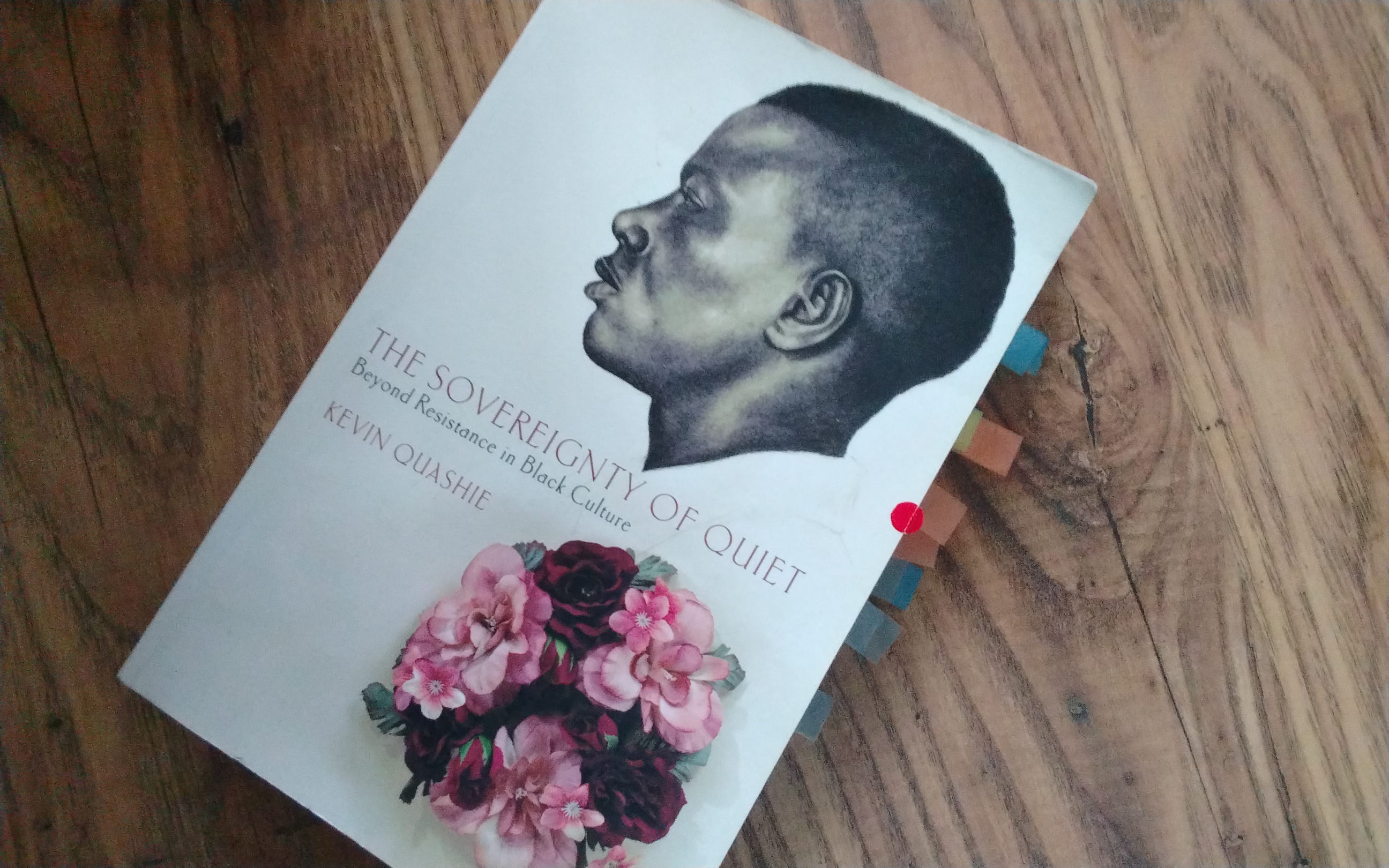
It is not the absence of activity. It is not passivity, resistance, or surrender to a perceived external power. It is a surrender to a peace that surpasses all understanding, a peace that equals wholeness — a peace that the accuser cannot touch. It is the way of Christ, in my interpretation.
Many can project whatever they want onto you, have ideas, and hurl abuse. I’m not saying it is right, or that we are to be doormats. No. But I am observing that whether they be your employers, those in power, your kinfolk, or even those in your father’s household, tending to that interior leads to a place where ultimately, you cannot be harmed.
Sometimes we are called to depart from those spaces where it is clear that you do not matter. Come out of her, whether institutional, familial, relational, systemic, spiritual, or structural. Come out of her for your own peace of mind. And if you cannot, then ensure that you keep yourself safe. Especially those of us who spend so much time making sure everyone else is safe.
Systems, structures, familiar patterns, and powerful people may often demand performativity and masking to be accepted. Your mask may be required to walk through a toxic environment for a time in order to survive. But don’t let it numb you. Walk through that valley of the shadow toward the light and let it show up all the weeds. And when you find them, make sure that you tend to the interior garden of your soul. The peace cultivated from that will always reign supreme. It is where your sovereignty lies. That power is real.
I wrote the draft for this in pencil on white paper, lying on my Pilates mat in my living room, my tummy making contact with the ground, creating a sense of play and a place of safety.
Reflection:
What action can you take to bring your spirit and soul to a sense of childlike acceptance of self and encourage ease and tending to your interior?
What leads you beside the still waters and quiets your soul?
Reflect on it, and then I encourage you to go do it — or rather, just be it.
Enjoy the quiet.
Joining you on the mat, in the chapel of right relations, in this dancing way.
Thank you for this powerful, wise post. It’s beautiful to hear that you had some opportunities and are making space for more tending of your inner garden. I hear your peace that passes all understanding as if I entered into a deep forest.
Reading that you wrote the draft by hand as you lay on your belly on your Pilates mat gives a me gentle smile. It reminds me of hearing the Dalai Lama speak deep wisdom and then end with a gentle smile and delightful laugh.